Success Does Not Protect You From Doubt: The COVERT Risk of Constant Motion
If you are “successful” and still doubting yourself, this is for you.
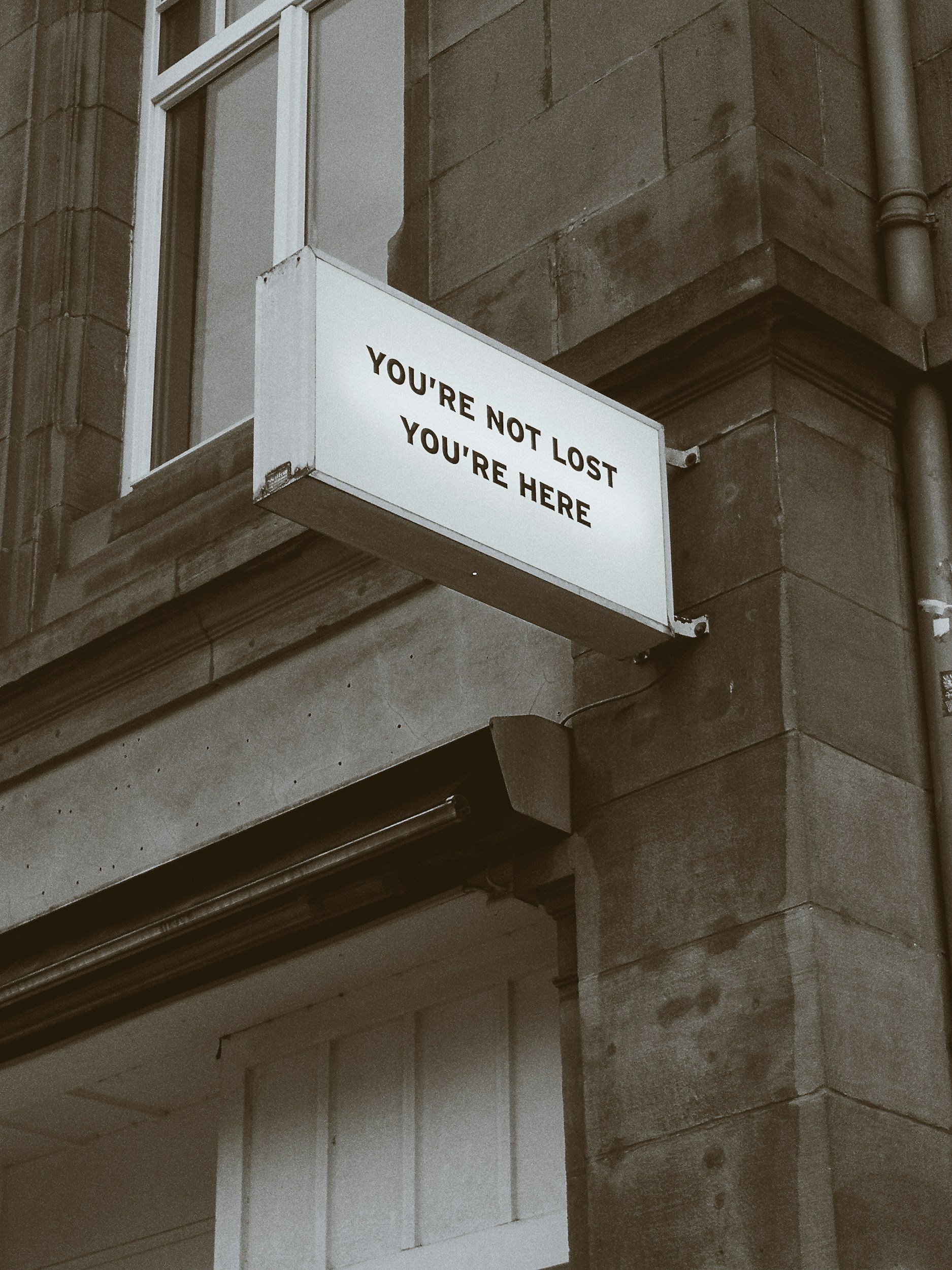
Success has a strange side effect.
Success does not remove doubt.
It just makes it harder to admit.
The more senior you become, the more composed you are expected to appear. The more decisions you carry. The more visible you are. The less room there seems to be for uncertainty.
So you move.
You respond quickly.
You solve.
You keep delivering.
You stay indispensable.
From the outside, it looks like strength.
From the inside, constant motion can become a strategy.
Not for growth.
For containment.
And that is where emotional intelligence becomes critical.
Not as a soft skill.
As self-leadership under pressure.
In my conversation with Gary Nowak on the Coffee House Coaching podcast, we kept returning to a theme I see often in coaching high-impact leaders.
When pressure increases, clarity does not.
It usually disappears under noise.
And the higher you climb, the louder that noise gets.
If you would like to listen to the full conversation, you can find it here. Insert podcast link.
Leadership today isn’t about having all the answers, it's about having the right questions.
The problem is not capability. It is noise.
At senior level, emotional intelligence is not about empathy in meetings.
It is about regulating yourself when scrutiny is high.
It is about noticing when pressure is driving your decisions.
It is about being able to sit with tension without reacting to it.
In my recent conversation on the Coffee House Coaching podcast, we explored something I see repeatedly with senior leaders.
When something feels off, a role, a restructure, a promotion that does not sit right, the instinct is to act.
Research.
Plan.
Reposition.
Act.
But speed without clarity does not create alignment.
It creates repetition.
The deeper question is rarely what should I do next.
It is who is driving this decision.
Is it you.
Or the version of you that has learned how to succeed.
That distinction is self-leadership.
Why doubt survives success
Doubt is not always a sign of weakness.
Often, it is a sign that you are operating at the edge of your identity.
The higher you climb, the more you are rewarded for output.
Not for introspection.
Constant motion protects performance.
It does not protect alignment.
You can be powerful and still feel misaligned.
You can be respected and still feel unsure.
Emotional intelligence with depth is the ability to pause long enough to examine that misalignment without collapsing into it or outrunning it.
That is not softness.
That is discipline.
Why Stillness Feels Exposed
In one coaching session, I asked six questions in fifty minutes.
There was a lot of silence.
Not awkward silence. Thinking silence.
Silence is uncomfortable for high performers because silence removes productivity as a shield.
When you stop moving, you meet what has been driving you.
Expectation.
Fear of disappointment.
Identity attachment.
Old narratives about worth.
Most leaders do not need more information.
They need a space where they are not being advised, assessed or evaluated.
A space where they can think properly.
As I said in the podcast, when coaching is working, it becomes you with you.
Not with the noise.
Not with external expectations.
That is emotional intelligence with soul.
It is not performative. It is honest.
A Client Example
I worked with a senior woman leading a ten million pound function of a major pharma company. After two years of a toxic restructure, she had not failed. She was still delivering.
But internally, she was flattened.
Her confidence had eroded. Not because she was incapable. Because she had been in survival mode for too long.
She came wanting confidence.
What she needed was containment.
We did not begin with tactics. We began with what the experience had cost her.
Until that was acknowledged, her doubt had nowhere to go except back into motion.
When she could hear herself clearly again, her decisions changed.
She secured three offers.
But more importantly, she trusted her judgement.
That is self-leadership restored.
Coaching Is Not Therapy. It Is Not Performance Optimisation.
If someone needs therapeutic support, I refer them.
Coaching at this level is forward focused.
It is about helping senior leaders strengthen internal regulation, clarify their values, and act deliberately.
It is not about boosting confidence artificially.
It is about rebuilding alignment.
And alignment changes how you lead.
The Hidden Risk of Constant Motion
Constant motion looks impressive.
It signals capability.
But if it is driven by avoidance rather than intention, it will eventually distort your decisions.
The leaders who move well are not the fastest.
They are the clearest.
If you are successful and still doubting yourself, the answer is unlikely to be more noise.
It may be a thinking partner who is comfortable with the uncomfortable.
Someone steady enough to sit in the silence with you until the signal becomes clear.
That is emotional intelligence with depth.
Not louder.
Not faster.
Clearer.
If you would like to hear the full conversation that shaped this reflection, you can listen to the podcast here.
